Another post? It's like a post overload!
I've set up a local subversion (svn) repository to manage the viewer source code as I make revisions, allowing me to easily save old versions, view what I've changed, and revert to the older version if something bad happens. It's not accessible over the internet (at least not yet), which means that it is of very limited usefulness to other people. But hey, I know how fun it is to read about what other people are doing that doesn't really affect me personally, so now my readers (I think I have some of those? Maybe I'm thinking of lemurs.) can enjoy the same luxury.
Here's the plan for repository layout:
Not to toot my own horn in public, but one of my images for the UI Abstraction Photo Contest won first prize! I thought that was pretty neat. It was this one:

You know that really loud and annoying typing sound? The one that plays whenever anybody starts to chat? The one that used to ruin in-world live music events? The one you muted all sound effects to get rid of?
Yeah, you know the one. Well guess what: you can replace it with the sound effect of your choice, or just get rid of it entirely. You don't even have to change any code in the viewer source; we could have done this all along. (Which really rubs salt in the wound, doesn't it?)
Here's how:
<!--Sound file for starting to type a chat message (uuid for sound asset)-->This only changes what you hear from your own client, which means everyone else will hear whatever they set. And best of all, you won't hear typing from other avatars, either! Now that's music to my ears!
<UISndTyping value=""/>
Minor news bulletin: I compiled the latest viewer source and successfully connected to the grid today. I'm not sure exactly why it worked this time, but there are a few major possibilities:
You may have read about the next contest at the Photography Studio in Grignano. I've submitted two images to the contest, which you can view below!
Both entries are based on a set of snapshots I did of one scene; every snapshot in the set was of the same scene from the same angle, but with different settings. The stark difference between the images below is the product of experimenting with how the many snapshots were layered and combined. The series is entitled "Welcome".
Click each image to view a larger size.

I've compiled the vanilla viewer 3 times so far, twice as "release" and once as "releasefordownload". I've also connected to the Grid (Agni) several times, but each time the connection was apparently interrupted or died or was deauthorized soon after log-in.
Movement, teleportation, profile viewing, map viewing, and who knows what else were non-operational. The Friends list seemed to work, and I tried to send a couple IMs to my online friends, but they were not received. L$ balance was blank, and some menu options were disabled (specifically "Appearance" and "Upload ____"). My avatar was invisible except for a few attachments attachments, and no in-world objects were visible. The terrain was visible, however.
There were several varieties of suspicious/interesting messages which flooded the console at various times.
The first variety looked like this:
I think it is reporting on the download and decoding of texture files from jpeg2000 format. Some time after the log-in process began, an increasing amount show up like this:[INFO] tile 1 of 1
[INFO] - tiers-1 took 1.032843 s
[INFO] - dwt took 2.815572 s
[INFO] - tile decoded in 4.792272 s
If I try to move or fly, I get messages like this:[INFO] tile 1 of 1
[ERROR] tcd_decode: incomplete bistream
[INFO] - tiers-1 took 0.117982 s
[INFO] - dwt took 0.406939 s
[INFO] - tile decoded in 0.736888 s
[ERROR] read error
If I try other things, I get the same message, but with "AgentUpdate" replaced with other message names, like "ViewerEffect" or "TeleportLandmarkRequest" or "AgentPause" or "LogoutRequest".2007-01-11T23:22:44Z WARNING: sendMessage - Trying to send AgentUpdate on unknown circuit 72.5.13.29:13004
On the plus side: except for not being able to log in or do much of anything, it works great! ...2007-01-13T23:04:01Z INFO: START MESSAGE LOG SUMMARY
2007-01-13T23:04:01Z Run time: 591.330 seconds
2007-01-13T23:04:01Z Incoming:
2007-01-13T23:04:01Z Total bytes received: 78004 ( 1.06 kbits per second)
2007-01-13T23:04:01Z Total packets received: 403 ( 0.68 packets per second)
2007-01-13T23:04:01Z Average packet size: 194 bytes
2007-01-13T23:04:01Z Total reliable packets: 24 ( 5.94%)
2007-01-13T23:04:01Z Total compressed packets: 71 (17.57%)
2007-01-13T23:04:01Z Total compression savings: 8097 bytes
2007-01-13T23:04:01Z Avg comp packet savings: 112 ( 1.38 : 1)
2007-01-13T23:04:01Z Avg overall comp savings: 20 ( 1.10 : 1)
2007-01-13T23:04:01Z
2007-01-13T23:04:01Z Outgoing:
2007-01-13T23:04:01Z Total bytes sent: 2000 ( 0.03 kbits per second)
2007-01-13T23:04:01Z Total packets sent: 437 ( 0.74 packets per second)
2007-01-13T23:04:01Z Average packet size: 5 bytes
2007-01-13T23:04:01Z Total reliable packets: 71 (16.21%)
2007-01-13T23:04:01Z Total compressed packets: 14 ( 3.20%)
2007-01-13T23:04:01Z Total compression savings: 244 bytes
2007-01-13T23:04:01Z Avg comp packet savings: 16 ( 1.22 : 1)
2007-01-13T23:04:01Z Avg overall comp savings: 0 ( 1.12 : 1)
2007-01-13T23:04:01Z
2007-01-13T23:04:01Z SendPacket failures: 0
2007-01-13T23:04:01Z Dropped packets: 10
2007-01-13T23:04:01Z Resent packets: 34
2007-01-13T23:04:01Z Failed reliable resends: 42
2007-01-13T23:04:01Z Off-circuit rejected packets: 267
2007-01-13T23:04:01Z On-circuit invalid packets: 0
2007-01-13T23:04:01Z
2007-01-13T23:04:01Z Decoding:
2007-01-13T23:04:01Z Message Count Time Max Avg
2007-01-13T23:04:01Z END MESSAGE LOG SUMMARY
Just brainstorming features (large and small) that would be both possible and desirable to add to the Second Life viewer client. Things which would require server changes don't fit here, only things which can be accomplished by changing the client only. I'm also focusing only on new features for this post; I might make another post of bugs that should be fixed.
I've dived head-first into the client source code. For the moment, I'm just orienting myself, poking my head around to see what goes where, building up a mental map of how the pieces fit.
An obvious next step is to attempt a compile of the viewer as-provided, before making any changes. That way, if something doesn't work, I will know that at least it used to work, so something I did broke it.
I'm also familiarizing myself with Linden Lab's issue tracker, wiki, mailing list, etc.—all the new stuff that appeared. I'll probably see if there are any little bugs in the issue tracker that I can fix.
In the meantime, I'm noting areas of the source code that interest me, so that I can focus and specialize in them. At the moment, improving the user interface seems to be where I get my kicks. The things I noted in my exploration of XUI as being impossible without access to the source code are now, of course, possible.
Lots of new toys to play with.
This is quite simply the most important SL news ever. Don't I seem excited? Well, I am. You could say I am cautiously optimistic.
Linden Lab has put a lot of thought and planning into this move, as evidenced by the info-laden open source page and new wiki. I can only hope they know what they are doing.
Yes, part of me worries about the negative effects we will almost certainly see in the near future. This has the potential to be much worse than the CopyBot scare, and with good reason—this turns the Grid upside-down. The assumptions that had been in place are now defenestrated, and business models will have to adapt, and adapt fast. Except for scripters and sex workers, there is no SL market I can think of that will not have to fundamentally rearrange itself.
Honestly, Linden Lab should have given an announcement several days prior to the source code release, to give time for preparation. I would not be surprised if many content providers close down temporarily, until they decide what to do.
We will probably see theft and panic. Temporary economic instability. But people will adapt. New business models will emerge. And most importantly, new tools will be created to improve Second Life.
Let's have hope for the future. The next few days will be rough as vendors panic, but things will calm down. Later, probably within a week, some new tool will be released to exploit some security hole, and more people will panic. But things will calm down again.
And then we'll see some really neat stuff. The kind of stuff that restores your faith in humanity.
That's how I see it, anyway. Time will tell.
Some excerpts
from the Technical Town Hall transcript that I found particularly interesting or insightful, for whatever reason. Quotes are sometimes followed by my comments, when I have something to add. All emphasis in the quotes is mine.
Server scaling, other than the centralized services issues I just covered, is primarily a function texture prioritization/downloading, script processing, physical simulation, and interest list calculation.
interest list calculationgave me a fascinating little peek at how the servers prioritize what content (esp. animations, sounds, and textures) to keep ready-at-hand to feed to your viewer. It also explains why editing or hovering your mouse cursor over an unrezzed texture often makes it rez faster. And why textures you haven't accessed in a year take longer to rez than textures a dozen people see every day.
We had a serious bug through october and november that was crashing sims in the messaging code. That bug is now fixed, so sim crash rates should drop. As we find them we try to kill them.
I will say that we are trying to update our messaging system to more properly leverage existing standards rather than our hand-rolled one. … Doing this is, as you might imagine, a tremendous amount of work, because we have to start by taking message template out behind the shed and shooting it. Then, we need simulators and viewers to be able to discover what features they have, be able to fall back gracefully, etc etc.
I would ask folks to remember that when we undertake major changes, it is a little like trying to rebuild the engine of a car. While driving it. And changing to a hydrogen economy. Without hitting anyone, losing control, or breaking the car.
If they [libsecondlife developers] break the terms of service we treat them like any other resident, but just because they tinker does not make them criminals.
Speaking of hiring … to reinforce what Philip said, if you and a friend are somewhere other than the Bay Area, we still should talk. We are already a distributed company and I see no reason why we can’t become more of one.

Jacek's secret herbs and spices
Builder Tool, which lives under the
Toolsmain menu. In it, I put lots of useful building tools and options that I took from various other menus. Now I can tear off one little menu, and have them close at hand while working! Yay!
Stretch Both Sidesand
Stretch Textures, was not much harder. But in fact, it is only possible because of the particular way that those two options, along with the
Snap to Grid/Use Gridoption, were implemented; I suspect that they were all once menu items in the past, or were intended to be so.
Snap to Gridcurrently is a menu item in the Tools menu, and it was by examining the XML for the menu item and comparing it to the corresponding checkbox in the Edit window that I discovered that it was possible to do the same with the other two options.
control nameof the option. Both the menu and the checkbox refer to the SnapEnabled control name: in floater_tools.xml, the
Use Gridcheckbox has an attribute, control_name="SnapEnabled"; in menu_viewer.xml, the
Snap to Griditem has two lines which mention SnapEnabled, once in an <on_click> tag, and once in an <on_check> tag.
Snap to Gridmenu item definition in both lines (be sure to change the text labels to be descriptive of their new functions).
There are specific things that I want to accomplish which drive me to poke my nose in SL's XML User Interface (XUI) definitions.
Here are the ones I have already accomplished:
Ok, so I changed the Second Life XML User Interface files to change some text labels and names in the Toolbox (Edit window). This was just a simple matter of reading through the floater_tools.xml file and changing a few words here and there. No biggie. (No, I did not add a new prim type!—I just renamed "Sphere" to "Watermelon". It's much nicer, don't you think?)
But aside from the obvious comedic value, what can changing the UI do for us?
Here's a good one, the true poster child of useful UI changes: we can decripple the Texture panel's "Transparency" input form. Have you noticed that you can only make an object 90% transparent using the UI, but you can make it 100% transparent with a single function call in a script? Linden Lab crippled the UI, perhaps to prevent new Residents from making hundreds of totally invisible prims and forgetting where they put them.
Well, if you are capable enough to edit SL's UI definitions, you are experienced enough to toss aside that crutch! Please note that the same disclaimer as my earlier post also applies here—you are doing this at your own risk! Here's how: in floater_tools.xml, search for the string ColorTrans
. That should take you to a <spinner> tag defining the spinner (a numeric entry form with up/down arrows on the side) that controls transparency. That tag has an attribute, max_val, which defines the highest number you are allowed to put in it. Change that number from 90 to 100. While you are at it, change the increment attribute to something more useful, like 5 or 10; now it will increase by that amount whenever you click the up/down arrows on the spinner (or use your mousewheel ← bonus pro tip for you!). The default value of 2 gives you a good degree of precision, at the expense of convenience. Don't forget that you can always just click on it and type in whatever number you want, when you need precision!
Now start (or restart) SL, and enjoy your newfound freedom!
Today, I was writing up a huge post about custom keyboard shortcuts. I was covering all the bases: why keyboard shortcuts make everything happy and warm, the ways in which SL's shortcuts are poo, and how Linden Lab could and should implement custom keyboard shortcuts. During my research into this last aspect, I realized something:
I can do it myself.
In fact, I not only can do it, I have done it. As a proof of concept, I successfully remapped the Ctrl-Shift-M shortcut. It had previously been bound to View > Mini-Map; it is now, for my Viewer, bound to World > Force Sun > Midnight.
This is just the beginning.
For the curious, here's how I did it.
Second Life's user interface is (at this point in the time, but not so in the past) defined as XML located in the skins/xui/xyz/ directory (where xyz is the language code; for English readers like myself, it's en-us). The XML for the menu bar along the top of the viewer is in the menu_viewer.xml file.
The majority of this file are <menu_item_call> tags, one block for each menu item. One of the possible attributes for this tag is "shortcut". The values for the shortcut attribute are a pipe-separated list of modifiers followed by a key. For example, the "Ctrl-Shift-M" key combination is expressed as "control|shift|m".
Make a backup copy of menu_viewer.xml before you make any changes, in case you break something and need to revert. Then use a text editor (or, if you have one, a dedicated XML editor) to open the file. Find the entry for "Mini-Map", and cut out the part that says: shortcut="control|shift|m". Then find the entry for "Midnight", and paste it after name="Midnight" (but before the closing brace; and don't forget to put a space between between the quote after Midnight and the beginning of shortcut).
That's it. Start up SL, and if everything went as planned, the "World > Force Sun > Midnight" menu item will show a shortcut key combo next to it, and "View > Mini-Map" will not. You can press Ctrl-Shift-M to see for yourself that it now forces the sun to midnight.
Like I said earlier: This is just the beginning. There are dozens of other XML files in that same folder, defining such things as the layout of the edit window, the min and max values of number entry forms, and many, many other things which I intend to experiment with.
I will close with this disclaimer: I re-read the SL Terms of Service tonight, especially section 4.2, which covers accessing SL with "unauthorized" software (this is one of the sections that was amended after the recent CopyBot scare). And although I think that modifying the XML files accessed by the SL Viewer client is probably not a violation of the spirit of the TOS, should you choose to do it, you do so at your own risk.
It would be a mistake for Linden Lab to discipline anyone for trying to improve their own user experience without harming others; but it wouldn't be Linden Lab's first. Fair warning.
The sun and moon in Second Life are unrealistic and just plain ugly.
That's right, I said it. I went there. Ugly!
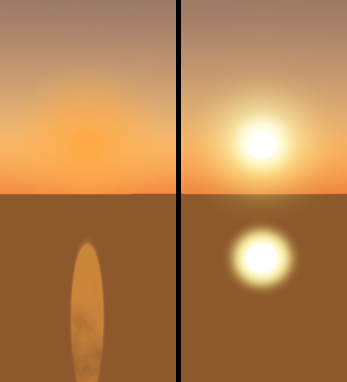
Figure A.
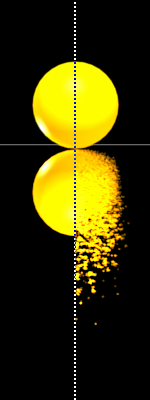
Figure B.
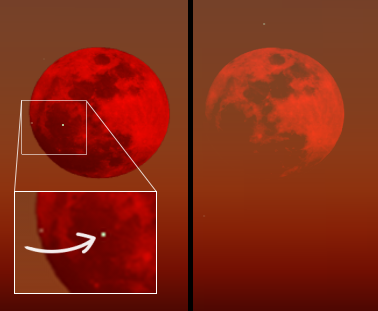
Figure C.
This is not a rant. This is a cautionary tale.
I have done all my ranting about this issue in private conversation; ranting in public would do nothing to help it. I will not be naming names, and I ask that anyone familiar with the situation refrain from the temptation as well. I am not writing this to attack any individual, but as a general warning to others, and a reminder to my future self.
Over the past month, I have been working with an individual, "X", to thrash out the design for a large-scale building project. We went through several iterations of the design as I began to understand what X wanted. Finally, X was satisfied with the direction I was taking the design, and asked me to submit a formal bid—how long it would take to build, and how much I would charge to build it.
I mulled it over for a couple days, and sent my bid to X: estimates for what work I would be doing, how many hours each part of the work would take, when I would start construction, and when construction would be complete—along with my fee (regardless of how long it actually took to build). Given the number of hours of work estimated, I was charging about US $15/hour for construction, texture treatment, and scripting (my design allowed for the layout of the building to easily change with the client's needs).
It was, from my point of view, a fair offer. Given the scope of the project and the skills involved, I could have asked for much more than that. However, I am not a big-name well-established builder, so there is some amount of risk, from the client's viewpoint, that what I deliver would not meet the client's expectations. I took this risk into account in my fee, among many other risks on both sides. Confident that my offer was reasonable, I sent my bid to X.
To put it nicely, X was not prepared to pay what I asked, and rejected my bid.
To put it accurately, X snidely accused me of charging an excessive amount for my services and dismissed me without any further discussion.
X, it seems, would not pay more than a certain amount which, given the number of hours I had estimated as necessary, came out to less than US $3.50 per hour. Upon hearing this, I (trying to remain civil) asked X for verification of that rate, and asked if the number of hours I was estimating was, perhaps, more than would be necessary to achieve X's vision. X refused to discuss it.
Now, X had been a difficult client to work with during the design phase. X's "requirements" were vague, and in some cases contradictory or simply impossible given the realities of three-dimensional space. (On the other hand, if I were building for four-dimensional space, such pithy concerns as distance and volume could be ignored). I was warned by another builder who had worked with X. I had no reason to expect X to act rationally, but hope springs eternal.
The lessons I have learned (or had reinforced) are: